
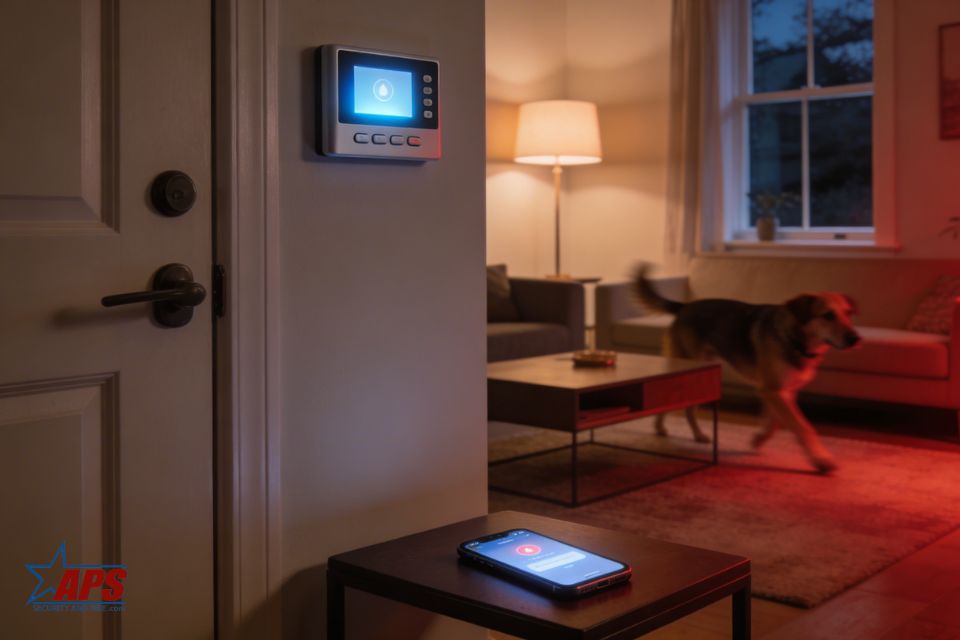
False alarms are more than a minor annoyance. National studies estimate that between 94 and 99 percent of burglar alarm activations police respond to turn out to be false, costing agencies billions of dollars and significant time each year.
They can lead to fines, strain relationships with neighbors, and cause people to ignore alerts when something serious actually happens. Over time, too many false alarms can undermine confidence in a system meant to give you peace of mind.
APS Security and Fire understands how frustrating false alarms can be for homeowners and businesses alike. As a security company with decades of experience, they focus on identifying the real causes of frequent alarms and recommending practical steps to reduce unnecessary activations while maintaining strong protection.
Common Causes Of False Alarms
False alarms usually have a clear cause, even if it is not obvious at first. In many cases, small details in how a system is set up or used can lead to recurring problems.
Some of the most common triggers include:
- Incorrect or outdated user codes that cause mistaken entries
- Doors and windows that are not fully closed or have loose latches
- Pets moving through the field of older motion detectors
- Balloons, plants, or curtains shifting in the path of sensors
- Faulty or aging sensors that send random signals
- Low batteries that cause devices to behave unpredictably
Understanding which of these applies to your system is the first step toward reducing nuisance alarms.
User Errors That Lead To False Alarms
A large percentage of false alarms comes from everyday mistakes. Someone rushes out the door, arms the system, and forgets that a window is still cracked open. A guest enters through a different door and does not know the code. A new employee is not fully trained on how to arm and disarm the system.
You can reduce these issues by:
- Making sure everyone who uses the system knows the correct codes
- Agreeing on which doors people should use when the system is armed
- Posting simple instructions near keypads
- Updating codes when staff or household members change
These small habits help prevent false alarms before they start.
Equipment And Installation Issues
Sometimes the problem is not the person but the hardware. Sensors that are poorly placed, incorrectly aimed, or starting to fail can trigger alarms for the wrong reasons. Motion detectors may be aimed at ceiling fans, vents, or windows. Door contacts might be slightly misaligned, so they read “open” even when closed.
In these cases, a professional inspection can help. A security expert can test sensors, adjust angles, secure loose contacts, and replace aging devices that are sending bad signals. Keeping equipment in good condition is a key part of controlling false alarms.
Environmental Factors You Might Overlook
Weather and environment can also play a role. Strong winds can shake doors or windows. High humidity or temperature swings may affect older sensors. Insects or small animals can trigger motion detectors, especially in garages, attics, or unfinished spaces.
You can reduce these triggers by trimming plants away from sensors, sealing gaps where bugs might enter, and making sure motion detectors are not pointed at areas with frequent small movements. For some spaces, adjusting sensitivity settings or upgrading to newer sensor technology can also make a big difference.
Working With APS Security and Fire To Reduce False Alarms
Reducing false alarms is about more than avoiding annoyance. It keeps your system trusted, ensures real alerts get the attention they deserve, and can help you avoid unnecessary fines or visits from responders. When user training, equipment placement, and environmental factors are all addressed, most properties see a clear drop in nuisance activations.
At APS Security and Fire, we have been helping Central Florida homeowners and businesses troubleshoot and prevent false alarms since 1987. We use reliable alarm products, careful installation, and clear guidance to keep systems responsive without constantly crying wolf.
If you are dealing with repeated false alarms or want to prevent them before they start, contact our experts today to review your current setup and create a plan for smoother, more dependable security.