
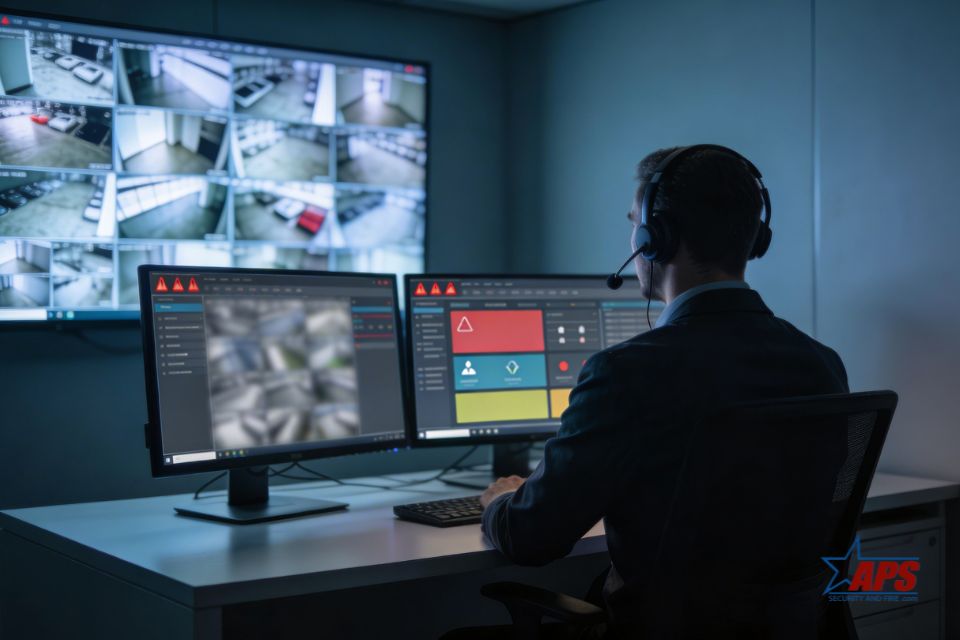
Alarm monitoring has shifted from simple signal forwarding to a connected, intelligent service that filters noise, verifies events, and reaches you almost instantly. AI and 5G now sit at the center of that change, reshaping what effective home security looks like in everyday life.
APS Security and Fire understands that modern alarm monitoring must keep pace with faster networks, smarter video, and evolving threats while still staying reliable during storms and outages. Their team focuses on choosing monitoring options that blend proven hardware with newer tools, so homeowners gain real benefits, not just buzzwords.
How AI Is Changing Alarm Monitoring
Traditional alarm monitoring relies mostly on simple triggers such as door contacts or motion sensors. AI adds another layer by analyzing patterns from cameras and sensors, so systems can better distinguish between everyday activity and real threats. When integrated with video, AI can help verify alarms in near real time, reducing false dispatches and helping monitoring professionals respond with clearer information.
For homeowners, this can mean fewer nuisance alerts from things like blowing branches or harmless motion, and more meaningful notifications when a person is actually on the property at unusual times. It also supports features such as smarter alerts on your phone, clips tied to alarm events, and monitoring centers that see what triggered an alarm instead of just receiving a code.
What 5G Means For Alarm Monitoring
5G networks bring faster speeds and lower latency, which helps alarm signals, app notifications, and video clips travel more quickly and consistently. In practice, that can shorten the time between an event occurring, the system detecting it, and a monitoring center or homeowner seeing what is happening.
5G also supports more connected devices at once, which is useful as homes add cameras, sensors, and smart locks that all tie into alarm monitoring. For properties that rely on cellular rather than landline communication, stronger networks can improve reliability during peak usage and in areas where older cellular standards are being phased out.
New Rules For Designing Alarm Monitoring Today
Modern alarm monitoring works best when it is designed as part of a complete security plan rather than added as an afterthought. That means thinking beyond whether a system is simply “on” or “off” and focusing on how alerts will be verified, who will respond, and how quickly they will receive usable information.
A few practical guidelines include:
- Pair monitored alarms with cameras, where verification would help reduce false dispatches.
- Use secure, redundant communication paths, such as cellular or dual-path, instead of relying solely on landlines.
- Keep contact lists, app access, and codes up to date so alerts reach the right people.
- Plan how AI features will be used, such as person detection or activity zones, instead of turning everything on by default.
These choices help alarm monitoring feel more precise and less intrusive, while still giving professionals what they need to act quickly.
Alarm Monitoring With APS Security and Fire
Alarm monitoring now involves faster networks, smarter analytics, and more connected devices, but its core purpose has not changed: making sure real emergencies do not go unanswered. By combining AI tools, 5G connectivity, and thoughtful system design, homeowners can get clearer alerts, fewer false alarms, and stronger support when it matters most.
APS Security and Fire has been providing professionally monitored security and fire systems for Central Florida homes and businesses since 1987, using trusted products and carefully designed communication paths to keep systems responsive around the clock. If you are reviewing your current alarm monitoring or considering an upgrade to take advantage of newer technology, contact APS Security and Fire today to discuss your options and put a monitoring plan in place that fits your home and your routine.