
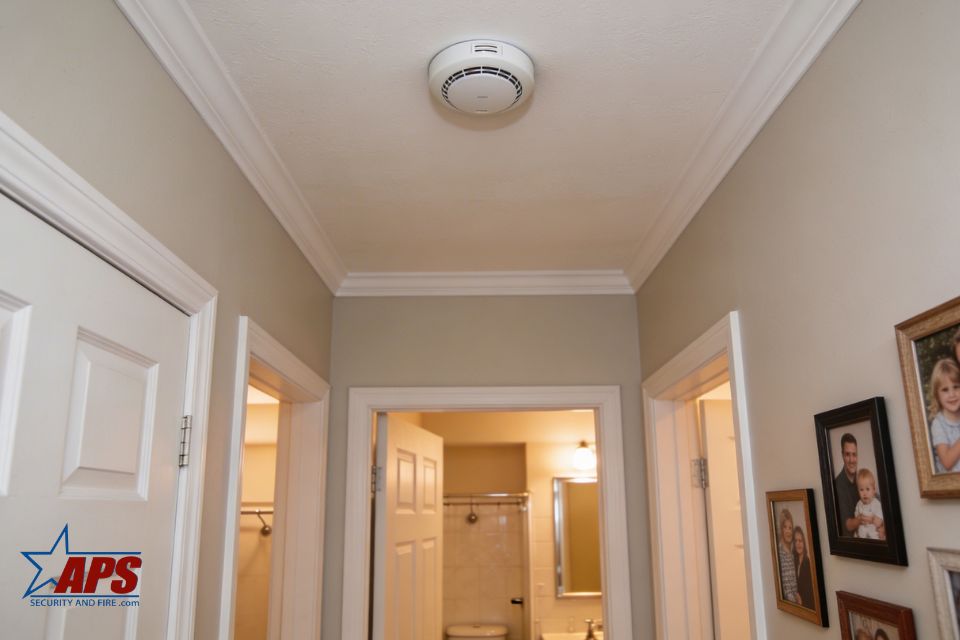
Home fire safety often fails not because people do nothing, but because they trust fire alarms that are installed incorrectly, poorly maintained, or easy to ignore. A fire alarm can only protect you if it is installed correctly, works reliably, and is heard by everyone who needs to react.
APS Security and Fire focuses on helping homeowners avoid common fire alarm mistakes that quietly undermine protection. By reviewing where devices are installed, how they are powered and tested, and how the system alerts people, they help turn good intentions into real, reliable safety.
Relying on Too Few Fire Alarms
One of the most serious mistakes is assuming a single fire alarm near the kitchen or hallway is enough. However, in many homes, that leaves bedrooms, basements, and far ends of the house with little to no early warning.
A better approach is to have a fire alarm inside or just outside each sleeping area, on every level of the home, and near main escape routes. That way, smoke from a fire has far less distance to travel before triggering an alarm that wakes people up.
Installing Fire Alarms in the Wrong Spots
Even with enough devices, placement can still cause problems. Fire alarms mounted too close to air vents, windows, or ceiling fans may miss smoke because air currents push it away from the sensor.
Mounting alarms on or near the peak of vaulted ceilings without following manufacturer guidance can also delay detection. In most homes, alarms work best on the ceiling a short distance away from walls, or high on the wall following installation instructions, so smoke can reach them quickly without being trapped or diverted.
Ignoring Low-Battery Chirps and Test Buttons
Another common mistake is living with a chirping fire alarm for days or weeks. People sometimes disable the device, remove the battery, or silence it repeatedly without fixing the underlying issue. That turns a working alarm into a silent piece of plastic on the ceiling.
Testing fire alarms monthly and replacing batteries as recommended helps prevent this problem. For many households, choosing an interconnected or long-life battery alarm reduces the risk that someone will pull out a weak battery and forget to replace it.
Disabling Alarms After Nuisance Activations
Frequent false alarms from cooking, steam, or dust lead some people to remove fire alarms near kitchens or bathrooms. While this might reduce annoyance, it also removes important coverage in areas where many home fires start.
A safer option is to move the alarm a few feet away from the source of steam or cooking smoke, improve ventilation, or upgrade to models with better nuisance alarm resistance. Keeping protection in place while reducing false triggers helps everyone take each alarm more seriously.
Mixing Old and New Devices Without a Plan
Fire alarms do not last forever. Using a mix of very old and newer units can create uneven coverage, with some alarms more likely to fail or miss smoke. Older devices may also lack features like interconnection, which sounds all alarms when smoke is detected.
Checking the manufacturer’s date on each fire alarm and replacing units that are past their recommended service life keeps the system more reliable. Coordinating upgrades so alarms work together also helps people hear alerts no matter where a fire starts.
Planning Better Fire Alarm Protection with APS Security and Fire
Avoiding these fire alarm mistakes is one of the simplest ways to reduce risk at home. When alarms are placed correctly, maintained regularly, and chosen to match the home’s layout, they give everyone more time to escape and call for help.
With over 35 years of experience serving Central Florida, APS Security and Fire can review your setup and create a fire alarm plan that better protects the people inside your home, whether you are unsure about your current alarms or planning safety system updates. Contact APS Security and Fire today to schedule a consultation.