
Florida’s weather can test any security system, especially during storm season. High winds, heavy rain, lightning, and power interruptions all make it harder for equipment to stay online and keep protecting a home. Choosing between wired and wireless security systems is not just about convenience; it is about how well each option performs in the worst weather.
At APS Security and Fire, years of working with Central Florida homeowners have shown that both wired and wireless systems can perform well during storms when they are thoughtfully designed and installed. Understanding how each type responds to Florida’s conditions can help you decide which approach better fits your home and your expectations.
How Wired Security Systems Respond to Storms
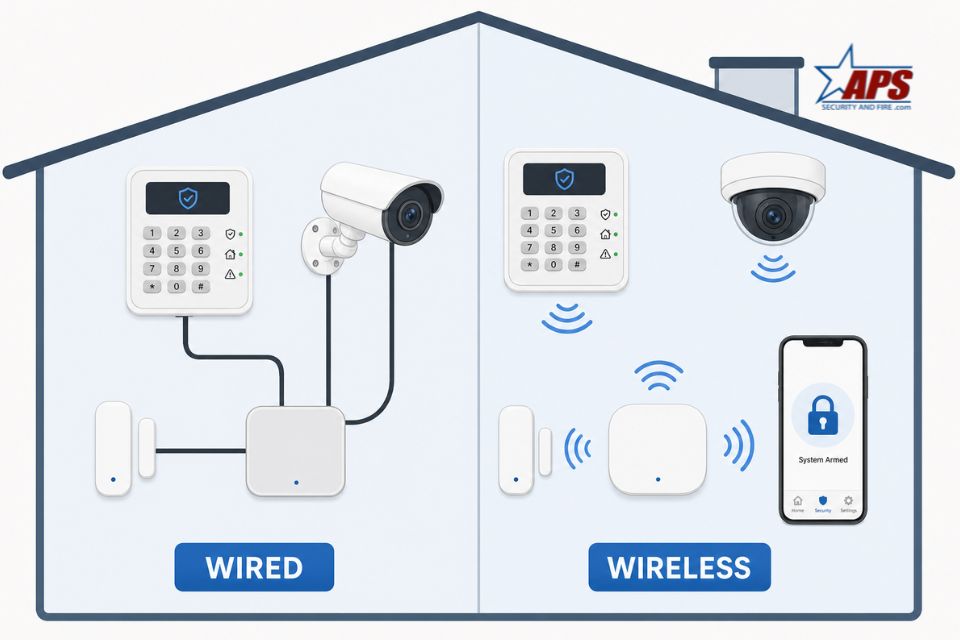
Wired security systems rely on physical cabling to connect devices such as sensors, cameras, and control panels. Those cables can be an advantage in storms because they are not affected by wireless signal interference. As long as the wiring and connections remain intact, communication inside the system is usually stable.
The main challenge for wired systems in Florida storms is power. If the home loses power and the system lacks reliable battery backup, it may go offline when you need it most. Exterior wiring and junctions can also be exposed to moisture, which can cause corrosion or damage over time if not properly protected.
How Wireless Security Systems Respond to Storms
Wireless security systems use radio signals and, often, WiFi or cellular connections to link devices to the main hub. In everyday use, this makes them flexible and easier to expand, which is one reason many homeowners like wireless security systems.
During storms, wireless systems bring both strengths and vulnerabilities. A system that uses cellular communication can keep sending alerts even if internet service or phone lines are disrupted. On the other hand, heavy rain, wind, and electrical interference can sometimes affect signal quality.
If a home relies heavily on WiFi and the router loses power or the network becomes unstable, some wireless devices may struggle to stay connected.
Where Each Type Has an Edge
When it comes to handling Florida storms, each approach has areas where it tends to perform better.
- Wired systems often provide more stable internal communication because devices are connected directly by cable.
- Wireless security systems can be less dependent on local wiring and may continue to communicate via cellular links even when lines are damaged.
- Wired cameras and sensors are less likely to drop offline due to weak WiFi but can be more vulnerable if outdoor cables or junctions are exposed to moisture.
- Wireless devices are easier to relocate or add as your needs change but rely more on strong, consistent signal paths and wellplanned network coverage.
In many homes, a hybrid approach that combines wired and wireless elements can offer the best balance for storm performance.
Designing for Florida Storm Conditions with APS Security and Fire
The question of wired or wireless becomes less about a simple “either/or” and more about how thoughtfully the system is built for local conditions. Battery backup, surge protection, sealed outdoor connections, and wellplaced hubs all matter as much as the type of system you choose.
A system designed for Florida should account for regular power interruptions, heavy rain, and long periods of heat and humidity. That might mean using wired connections where stability is critical, adding wireless devices where flexibility is needed, and ensuring everything has suitable backup power and protection against moisture.
APS Security and Fire has more than 35 years of experience helping Central Florida homeowners select and install wired, wireless, and hybrid security systems that perform reliably in storm season. Are you considering an upgrade or wondering whether wired, wireless, or a mix of both is better for your home?
Contact our security experts to review your current setup and discuss options tailored to Florida’s climate.