
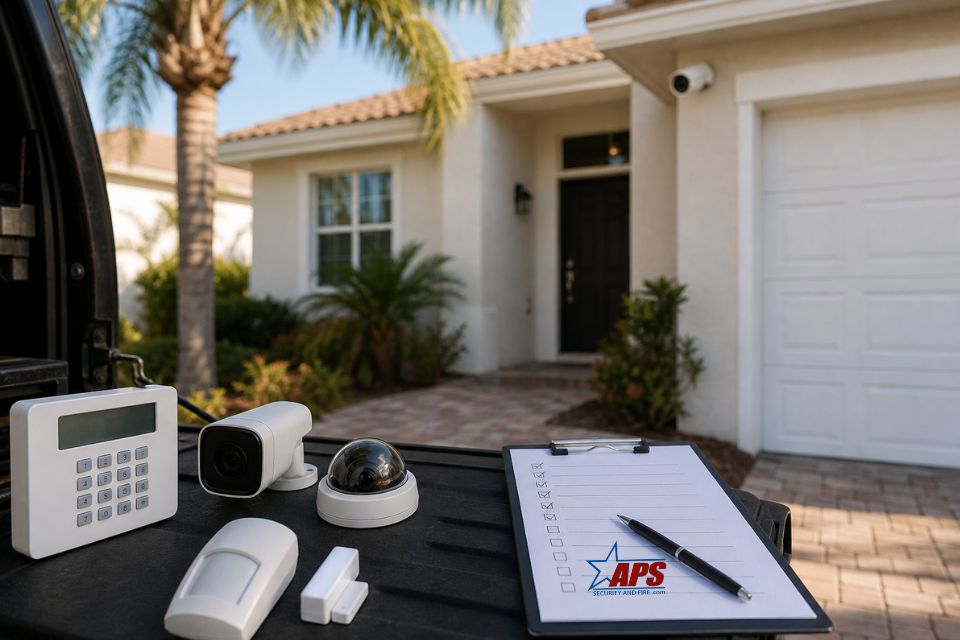
Security system installation can do a lot to improve safety, but only when the system is planned and installed correctly. A setup that appears complete can still have weak points if sensors are poorly placed, cameras miss key angles, or equipment is not tested under real conditions.
At APS Security and Fire, careful planning has long been part of helping Central Florida property owners build more dependable protection. Looking at common installation mistakes can help homeowners and business owners better understand what makes a system effective and where professional guidance can make a meaningful difference.
Common Gaps During Installation
One of the most common problems with security system installation is poor device placement. A sensor or camera may be installed and working, but if it is not covering the right area, it may not help much during an actual event.
Some of the most common gaps include:
- Door and window sensors installed on openings that do not fully align or close securely
- Motion detectors placed too high, too low, or pointed away from normal paths of movement
- Cameras aimed too high to capture useful facial detail
- Devices placed where glare, shadows, or low light affect image quality
- Equipment installed near the edge of Wi-Fi range or in areas with unreliable power
These issues are often small on their own, but together they can reduce the value of the entire system. That is why placement matters just as much as the equipment itself.
Why Professional Installation Matters
Professional installation is important because security systems work best when they are tailored to the property and the people who use it. A trained installer can evaluate entry points, traffic patterns, lighting conditions, and connection strength before deciding where each component should go.
That process can help reduce false alarms, improve camera coverage, and ensure the system works as it should in everyday use. Professional installation can also help avoid common oversights such as dead zones, weak signals, or devices that are technically installed but not positioned for real protection.
Testing Makes the Difference
Another mistake is assuming the job is done once the system powers on. A quick setup check does not always indicate whether alerts arrive on time, whether cameras capture clear footage, or whether a motion detector responds as it should.
Testing the system under realistic conditions is one of the best ways to identify gaps before they become problems. Opening monitored doors, walking through covered areas, and reviewing camera footage can reveal issues that are easy to miss during installation.
Building More Reliable Protection with APS Security and Fire
Security system installation is more than a basic setup task. When you carefully review the layout, place devices with purpose, and test the system in real conditions, the result is usually stronger, more reliable protection.
APS Security and Fire has more than 35 years of experience serving Central Florida, helping homeowners and businesses make informed decisions about system design and installation. To learn more about closing coverage gaps and improving day-to-day protection, contact our trusted security system experts.