
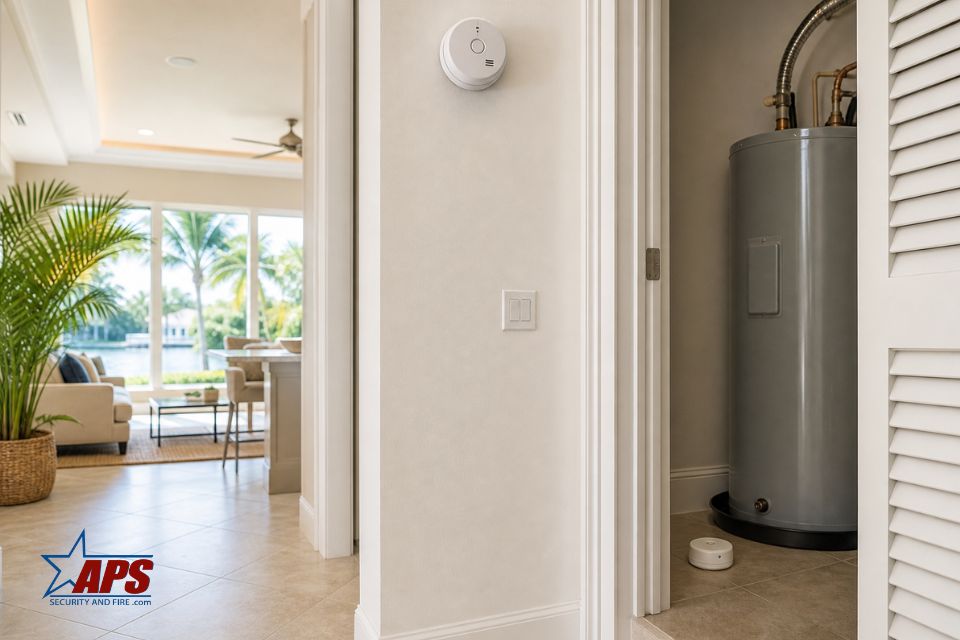
Hurricane season puts more than roofs and windows at risk. Power outages prompt generator use, which is one of the leading causes of carbon monoxide poisoning in Florida after a storm. Heavy rain and flooding also create the perfect conditions for water leaks that can go unnoticed until the damage is already done. These two risks rarely get the same attention as boarding up windows, but they deserve it just as much.
Florida law already recognizes the seriousness of carbon monoxide risk, which is why carbon monoxide alarms are required in many homes across the state. Understanding what the law requires and how it applies to storm season specifically helps homeowners see why a carbon monoxide detector and a water leak sensor are not optional extras.
APS Security and Fire works with homeowners across Central Florida every hurricane season, and one of the most common gaps found during home safety reviews is a missing or outdated carbon monoxide detector.
What Florida Law Requires for Carbon Monoxide Detection
Florida Statute 553.885 requires a carbon monoxide alarm in any dwelling built or permitted after July 1, 2008, if that home has a fireplace, an attached garage, or an appliance that burns fossil fuel. The alarm must sit within ten feet of each sleeping room. This requirement exists because carbon monoxide is invisible and odorless, which makes early detection through an alarm the only reliable way to catch it before it becomes dangerous.
During hurricane season, this risk increases. Portable generators are among the most common sources of carbon monoxide poisoning after a storm, especially when run too close to windows, doors, or vents, or when placed inside a garage, even with the door open. A working carbon monoxide detector is one of the simplest ways to catch a dangerous buildup before anyone in the home is affected.
Why Water Leak Sensors Matter During Storm Season
Water damage from hurricanes does not always come from an obvious source, such as a flooded street. Some of the most common causes include the following:
- Roof leaks after shingles or tiles are damaged by wind
- Blown-out shutters or windows allowing rain intrusion
- Sump pump failure during heavy, sustained rainfall
- Water heater or pipe damage from pressure changes during outages
- Slow leaks that go unnoticed while a home is empty during evacuation
A water leak sensor placed near the water heater, in the attic, or by exterior doors can alert homeowners the moment moisture is detected, often before visible damage appears. This matters most for anyone who evacuates during a storm and cannot check their home for days.
Getting Your Home Ready Before the Next Storm
Carbon monoxide and water leak sensors work best as part of a connected system rather than standalone devices, since a monitored setup can alert a homeowner immediately no matter where they are. This becomes especially important during a storm, when phone lines may be down, roads may be impassable, and returning home right away is not always possible. A connected system closes that gap by sending real-time alerts the moment a problem is detected, whether that means dangerous carbon monoxide levels or water pooling in the attic.
APS Security and Fire has spent more than 35 years protecting homes and businesses across Central Florida, including through every hurricane season the region has faced. If your home is not yet equipped with carbon monoxide and water leak monitoring, reach out to APS Security and Fire today and get your home ready before the next storm arrives.